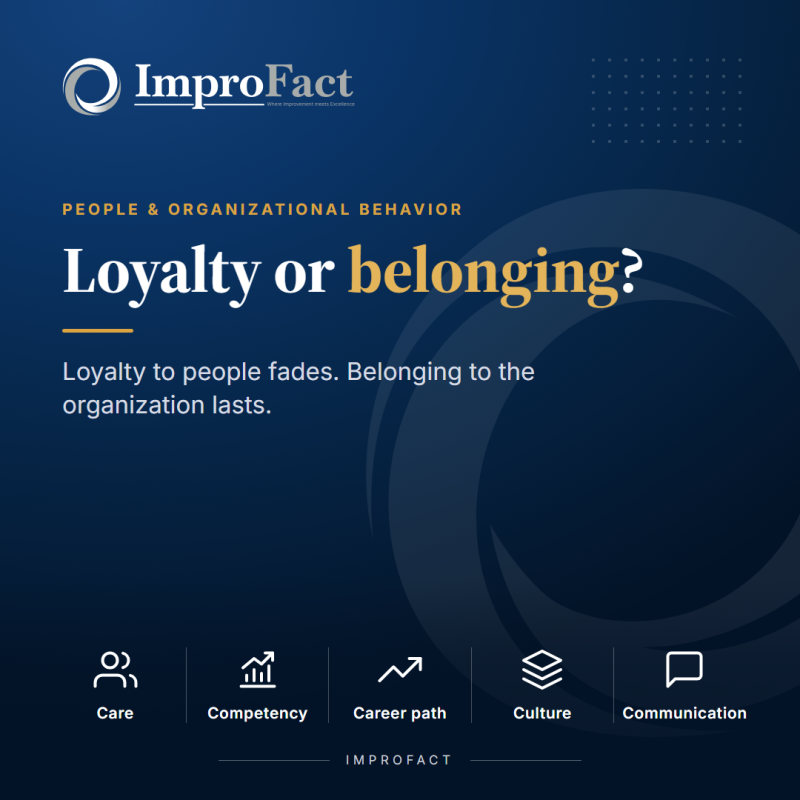
Many leaders believe they have built a strong culture because they have "loyal" employees. But that loyalty may be attachment to people, not belonging to the organization, and that is where the danger begins.
Loyalty is an emotional or personal attachment between an employee and a specific person inside the organization, such as a manager or the founder.
This kind of attachment depends on the personal relationship. It can lead to bias or division inside the organization, and it usually ends when the relationship with that person ends.
Loyalty to people leads to:
- Factions and cliques inside the organization
- Personal interests instead of shared goals
- A temporary strength that ends when the person leaves or influence shifts
- An emotional, unfair environment that obstructs institutional decisions
Belonging is an intellectual and emotional connection to the organization itself, to its mission, vision, values and systems, not to individuals.
An employee who belongs works and innovates because they believe the organization's success is their own success and that of the community around them.
Belonging to the organization leads to:
- Long-term stability
- Sustained performance regardless of changes in management
- Fairness, transparency and belief in a shared mission
- Inner commitment that comes from conviction, not from personal relationships
How is real belonging achieved inside an organization?
By building an environment that creates what management science calls organizational engagement, through five core pillars:
- Care: employees feel the organization cares about their development, their wellbeing and their work–life balance.
- Competency: providing training and development to raise people's capabilities, not just expecting results.
- Career path: employees see a clear future inside the company, not just a temporary job.
- Culture: a culture based on fairness, transparency, collaboration and innovation, not on personalities and influence.
- Communication: information flows clearly from management to employees and back, which builds trust and engagement.
How do we turn this into real results?
Through governance, systems, clear career paths and aligned goals.
Belonging is not built with speeches… it is built with institutional structure:
- A clear system
- Defined roles and responsibilities
- Fair policies
- Measurement and accountability mechanisms
An example that shows the difference
A company built on loyalty:
- The leader leaves
- His team leaves with him
- The company is shaken
- Revenue declines
- Internal division follows
This has happened in large companies when a chief executive left and his team followed: in one well-known company around 2012, an executive left and key leaders known for their loyalty to him followed, entire divisions underperformed and the company was affected for years.
A company built on belonging:
- The leader leaves
- Performance continues
- The culture produces new leaders from within
- The company keeps growing naturally
A clear example: Apple after the death of Steve Jobs. Performance did not collapse, because belonging was to the system and the vision, not only to the person.
How ImproFact helps
We build systems that create organizational belonging by:
- Building the right culture
- Designing the structure, governance and policies
- Enabling leaders to lead the system, not the people around them
- Training managers to create belonging and sustain performance
The bottom line
Loyalty sparks enthusiasm for a while… belonging releases an organization's energy beyond the limits of individuals and time.
In today's business world, only organizations that build belonging succeed, not those that bet on personal loyalty.
Read the original in Arabic
ولاء أم انتماء؟ الفارق الذي يصنع النجاح أو يُفجّر المؤسسة من الداخل
في بيئات العمل، كثير من القادة يعتقدون أنهم بنوا ثقافة قوية لأن لديهم موظفين "مخلصين". لكن الحقيقة أن هذا الإخلاص قد يكون ولاءً لأشخاص وليس انتماءً للمنظومة، وهنا يبدأ الخطر.
الولاء هو ارتباط عاطفي أو شخصي بين الموظف وشخص معين داخل المؤسسة، مثل المدير أو المؤسس.
هذا النوع من الارتباط يعتمد على العلاقة الشخصية، وقد يؤدي إلى تحيز أو انقسام داخل المنظمة، وينتهي غالبًا بانتهاء العلاقة مع ذلك الشخص.
الولاء للأشخاص يؤدي إلى:
- تحزّبات وتكتلات داخل المؤسسة
- مصالح شخصية بدلاً من الأهداف المشتركة
- قوة مؤقتة تنتهي بخروج الشخص أو تغيّر النفوذ
- بيئة عاطفية غير عادلة تعيق القرارات المؤسسية
الانتماء هو ارتباط فكري ووجداني بالمنظمة نفسها وبرسالتها، رؤيتها، قيمها، وأنظمتها وليس بأشخاص.
الموظف المنتمي يعمل ويبدع لأنه يؤمن أن نجاح المؤسسة هو نجاح له وللمجتمع من حوله.
الانتماء للمنظومة يؤدي إلى:
- استقرار طويل الأمد
- استدامة الأداء بغض النظر عن تغيير الإدارات
- عدالة، شفافية، وإيمان بالرسالة المشتركة
- التزام داخلي نابع من القناعة وليس من العلاقة الشخصية
كيف يتحقق الانتماء الحقيقي داخل المؤسسة؟
من خلال بناء بيئة تحقق ما يسمى في علم الإدارة بـ الارتباط المؤسسي (Engagement) عبر خمسة محاور جوهرية:
- الرعاية (Care) — أن يشعر الموظف أن المؤسسة تهتم بتطوره، صحته النفسية، وتوازنه في الحياة والعمل.
- الكفاءة (Competency) — توفير التدريب والتطوير لرفع قدرات الأفراد، وليس توقع النتائج فقط.
- المسار المهني (Career Path) — أن يرى الموظف مستقبلًا واضحًا داخل الشركة وليس مجرد وظيفة مؤقتة.
- الثقافة المؤسسية (Culture) — ثقافة قائمة على العدالة، الشفافية، التعاون، والابتكار – لا على الأشخاص والنفوذ.
- الاتصال الفعّال (Communication) — تدفق المعلومات بوضوح من الإدارة إلى الموظفين والعكس، مما يعزز الثقة والاندماج.
كيف نترجم ذلك إلى نتائج حقيقية؟
من خلال الحوكمة، الأنظمة، المسارات الواضحة، والمواءمة بين الأهداف.
الانتماء لا يُبنى بالخطابات… بل بالبنية المؤسسية:
- نظام واضح
- أدوار ومسؤوليات محددة
- سياسات عادلة
- آليات قياس ومساءلة
مثال يوضح الفرق بوضوح:
شركة مبنية على الولاء:
- القائد يخرج
- معه يخرج فريقه
- تهتز الشركة
- تتراجع الإيرادات
- يحدث انقسام داخلي.
حدث ذلك في شركات كبيرة عندما غادر مدير تنفيذي فتبعه فريقه، مثل ما حصل في إحدى الشركات المعروفة في فترة 2012 حيث غادر مدير تنفيذي تبعه قيادات أساسية معروفة بولائهم له فتراجع أداء قطاعات كاملة وتأثرت الشركة لسنوات.
شركة مبنية على الانتماء:
- القائد يخرج
- يستمر الأداء
- الثقافة تنتج قادة جدد من الداخل
- الشركة تنمو بشكل طبيعي.
مثال واضح: شركة Apple بعد وفاة ستيف جوبز. الأداء لم ينهر لأن الانتماء كان للمنظومة والرؤية وليس للشخص فقط.
كيف نساعد في ImproFact؟
نقوم بتأسيس منظومات تحقق الانتماء المؤسسي من خلال:
- بناء الثقافة الصحيحة
- تصميم الهيكل والحوكمة والسياسات
- تمكين القيادات من قيادة المنظومة لا الأشخاص
- تدريب المديرين على كيفية صناعة الانتماء واستدامة الأداء
الخلاصة:
الولاء يشعل الحماس مؤقتًا… أما الانتماء فيُطلق طاقات المؤسسة إلى ما بعد حدود الأشخاص والزمن.
وفي عالم الأعمال اليوم، لا تنجح إلا المؤسسات التي تبني انتماءً… لا تلك التي تراهن على ولاء الأشخاص.