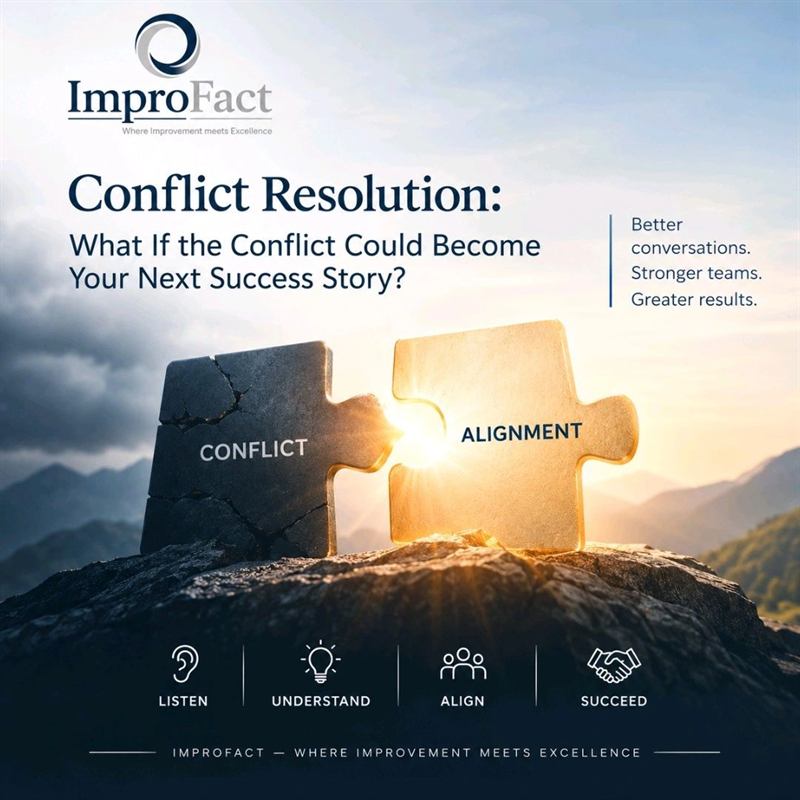
Work conflicts aren’t always bad. Different opinions can enhance decisions. Problems arise when disagreement turns personal, communication becomes hostile, and goals diverge.
What Should HR & Leaders Do?
First: Don’t rush to punish. Seek to understand.
A structured conflict-resolution approach can help:
- Listen, without judgment — Separate facts from perceptions, emotions, and concerns. Give each side space to be heard.
- Separate the behavior from the person — Address what happened and its impact—not the individual’s personality or character.
- Identify the root cause — Use the 5 Whys to go beyond the visible conflict. Is it really about a decision, unclear roles, competing KPIs, lack of trust, poor communication, or fear of change?
- Re-establish the shared objective — Shift the conversation from “Who is right?” to “What are we trying to achieve together?”
- Set clear boundaries — Employees have the right to disagree and challenge decisions—but disagreement must remain respectful, professional, and constructive.
- Agree on the way forward — Clarify responsibilities, decision rights, communication channels, and expected behaviors.
- Follow up — Resolution does not end with a meeting. Monitor the relationship, behavior, and business outcome to ensure alignment is sustained.
Culture and Governance
Conflict resolution should never depend on the personality or patience of one manager or HR professional. It should be embedded in the organization’s culture, governance, and procedures.
Organizations should create an environment that encourages:
- Open communication
- Respectful disagreement
- Fair and objective investigation
- Clear accountability
- Confidential escalation channels
- Consistency in leadership decisions
- Continuous follow-up
The “Put Yourself in His Shoes” Technique
Before judging an employee’s reaction, step back and look at the situation from their perspective. What do they see? What are they feeling? What might they fear? What information are they missing? And why might they be responding this way?
Empathy means understanding the cause before deciding how to address the behavior.
How Can ImproFact Help?
Conflict is not always the problem.
Sometimes, it is a signal that something in the system needs attention.
At ImproFact, we help organizations build a structured environment where conflicts can be identified early, addressed professionally, and prevented from becoming toxic.
We support organizations in developing practical conflict-resolution approaches while strengthening the systems that prevent conflicts in the first place.
This includes clear roles and responsibilities, effective SOPs, structured communication and escalation channels, leadership alignment, and properly designed KPIs and OKRs that connect individual performance with organizational objectives.
ImproFact — Where Improvement Meets Excellence.